
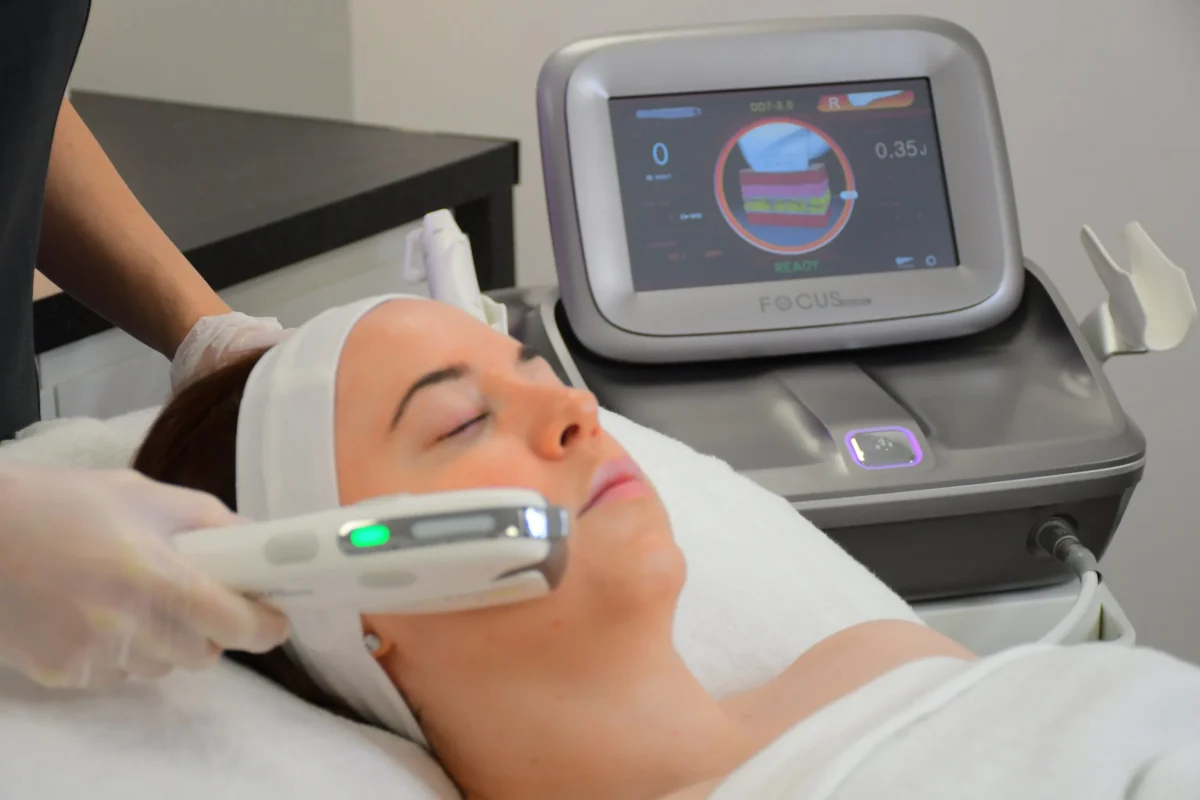
Sagging skin, a softer jawline, or fine lines around the eyes are some of the earliest signs of ageing that people notice. Many now search for non-surgical ways to firm the skin without going under the knife. HIFU facial treatment has become one of the most searched options for exactly this reason.
What Is a HIFU Facial?
HIFU stands for High-Intensity Focused Ultrasound. It is a non-surgical treatment that uses focused ultrasound energy to lift and tighten the skin from within, rather than working only on the surface.
The technology was originally developed for medical use, including tumour ablation, before being adapted for cosmetic skin tightening. This background is one reason dermatologists consider it a well-studied approach compared to newer, less-tested devices. You can read more about the underlying technology on <a href=”https://en.wikipedia.org/wiki/High-intensity_focused_ultrasound” target=”_blank” rel=”noopener”>Wikipedia’s overview of high-intensity focused ultrasound</a>.
A HIFU facial specifically targets the layers of skin and tissue responsible for firmness, including the SMAS layer (the same layer surgeons address during a facelift).
How Does a HIFU Facial Work?
HIFU delivers ultrasound energy to precise depths under the skin, usually between 1.5mm and 4.5mm, without cutting or damaging the surface.
Here is what happens beneath the skin during treatment:
- The focused ultrasound energy heats tissue at a targeted depth to around 60 to 70 degrees Celsius.
- This controlled heat triggers a natural healing response.
- The body responds by producing new collagen and elastin.
- Over the following weeks, this new collagen gradually tightens and lifts the treated area.
Because results depend on the body’s own collagen production, they build up gradually rather than appearing overnight. Most people notice visible tightening within two to three months, with results continuing to improve for up to six months.
What Are the Benefits of a HIFU Facial?
A HIFU facial is popular because it offers several practical advantages over surgical options.
- No incisions, injections, or anaesthesia are required.
- There is little to no downtime, so most people return to daily activities immediately.
- It stimulates natural collagen rather than adding volume artificially.
- Results look gradual and natural rather than sudden.
- A single session can address multiple areas, including the forehead, cheeks, jawline, and neck.
Who Is a Good Candidate for HIFU Treatment?
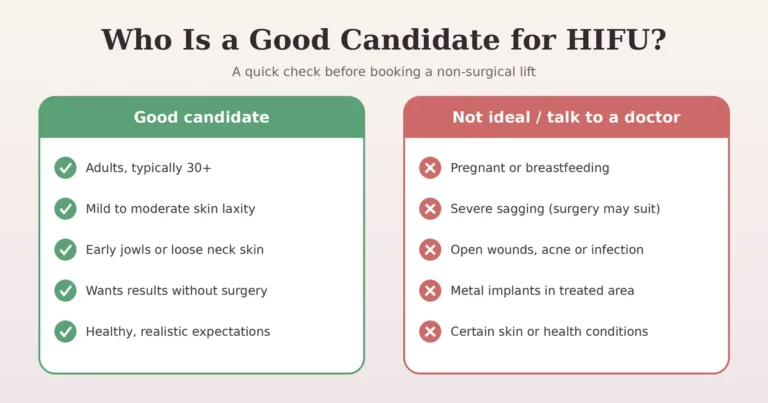
HIFU works best for people with mild to moderate skin laxity rather than severe sagging.
Good candidates typically include those who:
- Are in their late 30s to 60s and noticing early to moderate skin loosening.
- Want a non-surgical alternative to a facelift.
- Have realistic expectations about gradual, not dramatic, results.
HIFU is generally not recommended for:
- Pregnant or breastfeeding women.
- People with active skin infections or severe acne in the treatment area.
- Those with pacemakers or certain implanted medical devices.
- Anyone with a history of keloid scarring or bleeding disorders.
A qualified practitioner should always review your medical history before treatment to confirm suitability.
What Happens During a HIFU Facial Session?
A typical session follows a fairly consistent process:
- The skin is cleansed and a numbing gel may be applied if needed.
- An ultrasound gel is spread over the treatment area to help the device transmit energy.
- The practitioner uses a handheld device to deliver ultrasound pulses in a grid pattern.
- Sessions usually last between 30 and 90 minutes, depending on the areas treated.
Most patients describe the sensation as brief warmth or tingling with occasional mild discomfort, particularly over bony areas like the jawline.
What Are the Side Effects of a HIFU Facial?
HIFU is considered a safe procedure when performed by a trained provider, but temporary side effects can occur.
- Mild redness or swelling for a few hours to a day.
- Slight tenderness or tingling in the treated area.
- Temporary numbness that resolves within a few weeks.
- Rarely, small bruising at the treatment site.
These effects are usually short-lived and settle on their own without any special aftercare.
How Much Does a HIFU Facial Cost in Dubai?
HIFU face treatment cost in Dubai varies quite a bit depending on several factors, so it is difficult to quote a single flat price.
Cost typically depends on:
- The number of areas being treated, such as full face versus face and neck.
- The number of ultrasound lines or shots delivered during the session.
- The technology and device used by the clinic.
- The experience level of the practitioner performing the treatment.
- Whether the treatment is a single session or part of a recommended package.
Because results build gradually, some clinics also recommend a maintenance session once a year rather than repeated frequent treatments. It is worth asking for a written breakdown of what is included in the quoted price before booking.
How to Find the Best HIFU Treatment in Dubai
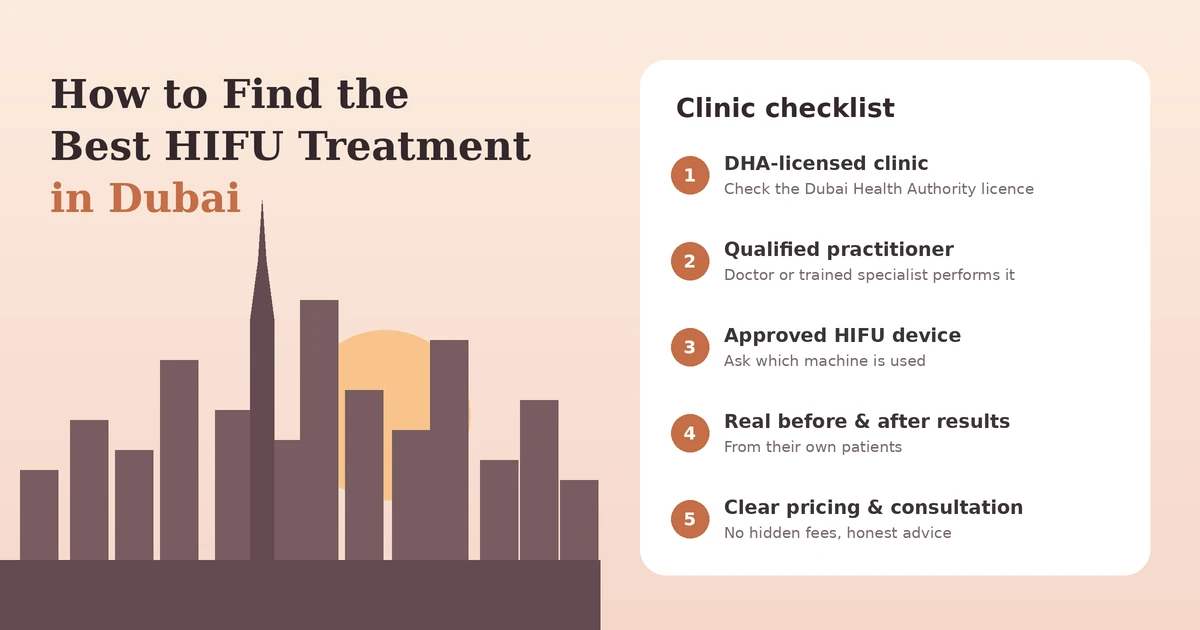
If you are searching for “HIFU treatment near me” or trying to identify the best HIFU treatment in Dubai, a few checks matter more than the marketing.
- Confirm the clinic is licensed by the Dubai Health Authority (DHA).
- Ask which specific HIFU device is used, since not all devices are FDA cleared.
- Check that a qualified practitioner, not just a technician, performs the assessment and treatment.
- Ask to see before and after results from real patients treated at that clinic.
Sasha Aesthetic Clinic in Jumeirah Village Circle offers non-surgical skin tightening treatments guided by DHA-licensed practitioners, and a consultation is a useful first step to understand whether HIFU suits your skin. You can review the clinic’s treatment options before deciding.
Is a HIFU Facial Worth Considering?
HIFU is not a replacement for a surgical facelift, and it will not produce the same dramatic result. What it does offer is a low-risk, low-downtime way to support the skin’s natural firmness, particularly for people who are not ready for surgery or simply want to maintain results between other treatments.
The most reliable way to know if it fits your skin and goals is a proper in-person consultation, where a practitioner can assess your skin laxity and set realistic expectations before you commit.
Frequently Asked Questions
Results typically last between 12 and 18 months, depending on individual skin condition and ageing rate. A yearly maintenance session helps sustain the tightening effect.
Most people feel brief warmth or tingling rather than sharp pain during treatment. Any discomfort usually fades quickly once the session ends.
Many people see noticeable improvement after just one session, though some choose a second session three to six months later. The exact number depends on the degree of skin laxity being treated.
HIFU is often paired with treatments like hydrating facials or chemical peels for a more complete result. A practitioner can advise on the right order and spacing between treatments.
There is no fixed starting age, since it depends on individual skin laxity rather than age alone. Most candidates begin noticing benefit from their late 30s onward, once early sagging appears.