

“How many units of Botox will I need?” is one of the first questions people ask before treatment. The honest answer is that your dose depends on your muscles, not on a fixed menu. Still, there are well-established ranges that help you understand a quote and spot one that looks off.
What Is a Unit of Botox?
A unit is a standard measure of the product’s strength, not its volume. One unit of Botox is not the same as one unit of Dysport, so you cannot compare brands unit for unit. Your doctor reconstitutes the product with saline and injects small, measured amounts into specific muscles.
How Many Units Does Each Area Need?
These are the ranges doctors commonly use for the upper face. Your own dose may sit above or below them.
- Forehead: Typical range: 10 to 20 units. What it treats: Horizontal lines when you raise your brows.
- Frown lines (glabella): Typical range: 15 to 25 units. What it treats: The “11” lines between the brows.
- Crow’s feet: Typical range: 10 to 15 units per side. What it treats: Fan lines at the outer eyes.
- Bunny lines: Typical range: 4 to 10 units. What it treats: Lines on the sides of the nose.
- Masseter (jaw): Typical range: 25 to 50 units per side. What it treats: Jaw slimming and clenching.
Why Is the Forehead Dose Often Lower Than Expected?
The forehead muscle lifts your brows. If a doctor treats it too heavily, the brows can drop and feel heavy. That is why many doctors treat the frown lines at the same visit and use a lighter, balanced dose on the forehead.
Why Do Two People Need Different Doses?
Doses vary for clear, practical reasons.
- Muscle strength. Strong, active muscles need more product to relax.
- Sex. Men often have larger facial muscles and may need 20 to 50 percent more.
- Line depth. Deep, etched lines may need a combination of Botox and other treatments.
- Goal. A soft, natural result uses fewer units than a fully “frozen” look.
- Treatment history. People who have had regular sessions sometimes need slightly less over time.
What Does a Full Upper-Face Treatment Usually Add Up To?
Many people treat three areas together: forehead, frown lines and crow’s feet. That combination often totals 45 to 75 units. Someone with light lines who wants subtle movement might need fewer. A man with strong frown muscles might need more.
This is why many clinics offer a fixed 3-area price. At Sasha, the 3-area Botox treatment is priced as one package, so you are not counting units yourself.
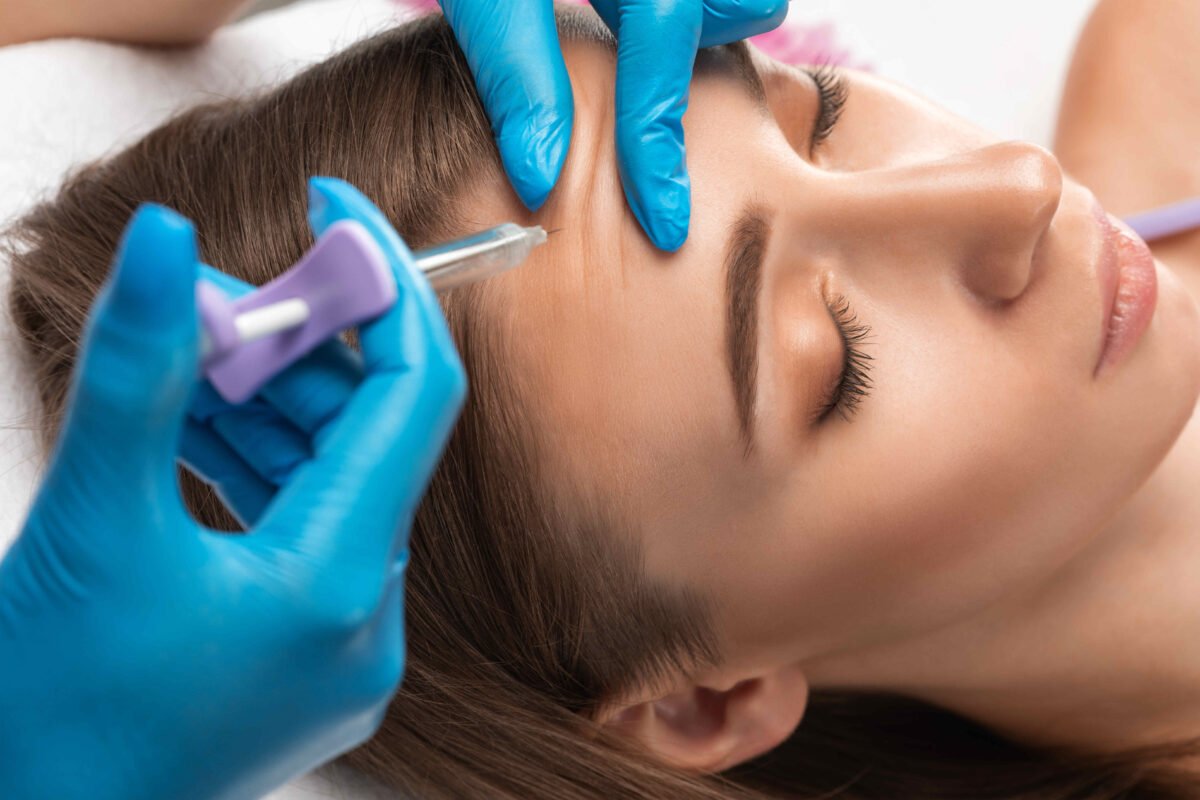
What Is “Baby Botox”?
Baby Botox uses smaller doses spread across an area. The aim is to soften lines while keeping more natural movement. It suits:
- People in their late 20s and 30s with early lines
- Anyone nervous about looking “done”
- Areas where a heavy dose could affect expression
The trade-off is that lighter doses may wear off sooner.
How Do Doctors Decide Your Dose?
A careful doctor does not guess. During your consultation, expect them to:
- Ask you to frown, raise your brows and smile so they can see each muscle work.
- Check your brow position and eyelid heaviness.
- Review your medical history, medicines and any past treatments.
- Agree a starting dose with you, often on the conservative side.
- Book a review at about two weeks to check the result.
Botox contains botulinum toxin, a prescription medicine, so this assessment matters for safety as well as results.
What Happens if the Dose Is Too Low or Too High?
Too low: You may still see some movement and lines. A small top-up at the two-week review usually fixes this.
Too high: You may notice heavy brows, a flat expression or, rarely, a drooping eyelid. These effects are temporary and fade as the product wears off, which is one more reason to start conservatively.
Questions to Ask Before You Book
Bring these to your consultation:
- Which brand will you use, and how many units do you estimate?
- Is a two-week review included?
- Is a top-up included if one area needs more?
- Who will inject me, and are they DHA licensed?
You can learn more about the clinic’s approach on the Sasha Aesthetic Clinic.
Finding Your Right Dose, Safely
The right number of units is the one that softens your lines and still lets your face move like yours. Start with a doctor who explains the dose, writes it in your notes and reviews you after two weeks. Over two or three sessions, you will learn what works for your face.
To get a personal assessment, contact our JVC clinic for a free consultation.
Frequently Asked Questions
Most people need between 10 and 20 units for forehead lines. Your doctor adjusts this to protect brow position.
Twenty units can be enough for a single area, such as frown lines. Treating several areas usually needs more.
Muscle strength, sex and line depth all change the dose. Two people treating the same area can need quite different amounts.
You can request a lighter dose, and many doctors start conservatively anyway. A softer result may wear off a little sooner.
They are dosed differently, so the numbers do not match. Compare prices by area or total cost rather than by unit.